Why the Contact Center Is Becoming a Revenue Engine, Not a Cost Center

Insights / Why the Contact Center Is Becoming a Revenue Engine, Not a Cost Center

Contact Center Revenue Engine Not Cost Center

For years, contact centers have been measured by how efficiently they reduce costs; lower handling times, fewer tickets and leaner operations. While those metrics still matter, they’re no longer enough. Today’s leading organisations expect the contact center to do more than resolve issues; they expect it to strengthen customer relationships, protect revenue and create new opportunities for growth.

That shift is being driven by AI, but not simply because it automates conversations. Its real value lies in understanding customer intent, recognising opportunities and enabling businesses to act before a customer reaches a competitor or abandons a purchase. The contact center is evolving from a reactive support function into a proactive engagement engine that influences retention, loyalty and revenue.

This transformation isn’t about adding another chatbot or voice assistant. It’s about bringing customer intelligence, AI, automation and human expertise together to deliver the right action at the right moment. Organisations that make this shift will be the ones that redefine the role of the contact center over the next decade.

From Support Function to Growth Engine

The contact center has traditionally been viewed as a reactive support function, focused on resolving customer issues quickly and efficiently. Today, leading organisations expect it to play a much broader role by helping to:

Strengthen customer relationships through personalised, proactive engagement rather than one-off transactions.

Protect and grow revenue by reducing churn, identifying upsell opportunities and increasing customer lifetime value.

Drive better business outcomes using customer intelligence to anticipate needs, personalise interactions and take action before opportunities are lost.

This shift changes the contact center from a cost center that resolves problems to a strategic function that contributes directly to customer loyalty, revenue growth and long-term business success.

What Changes When Customer Intelligence Leads the Conversation

AI doesn’t create business value simply by answering customer queries faster. Its real impact comes from understanding customer intent, recognising patterns across interactions and helping businesses act before an opportunity is missed or a problem escalates.

Instead of waiting for customers to make contact, intelligent contact centers can identify customers at risk of leaving, recommend the next best action, notify customers proactively or route complex cases to the right specialist with the full context already available. Routine enquiries are resolved automatically, while human agents focus on conversations that require judgement, empathy and expertise.

This is where the contact center begins to influence business outcomes. Every interaction becomes an opportunity to improve customer satisfaction, strengthen loyalty, prevent churn or create new revenue opportunities, transforming customer service into a strategic growth function

One Conversation. One Customer. One Intelligent Platform.

AI creates the greatest value when it works from a complete view of the customer rather than isolated interactions. Instead of simply responding to enquiries, intelligent contact centers recognise customer intent, identify opportunities and recommend the next best action whether that’s resolving a query, preventing churn or connecting a customer with the right advisor.

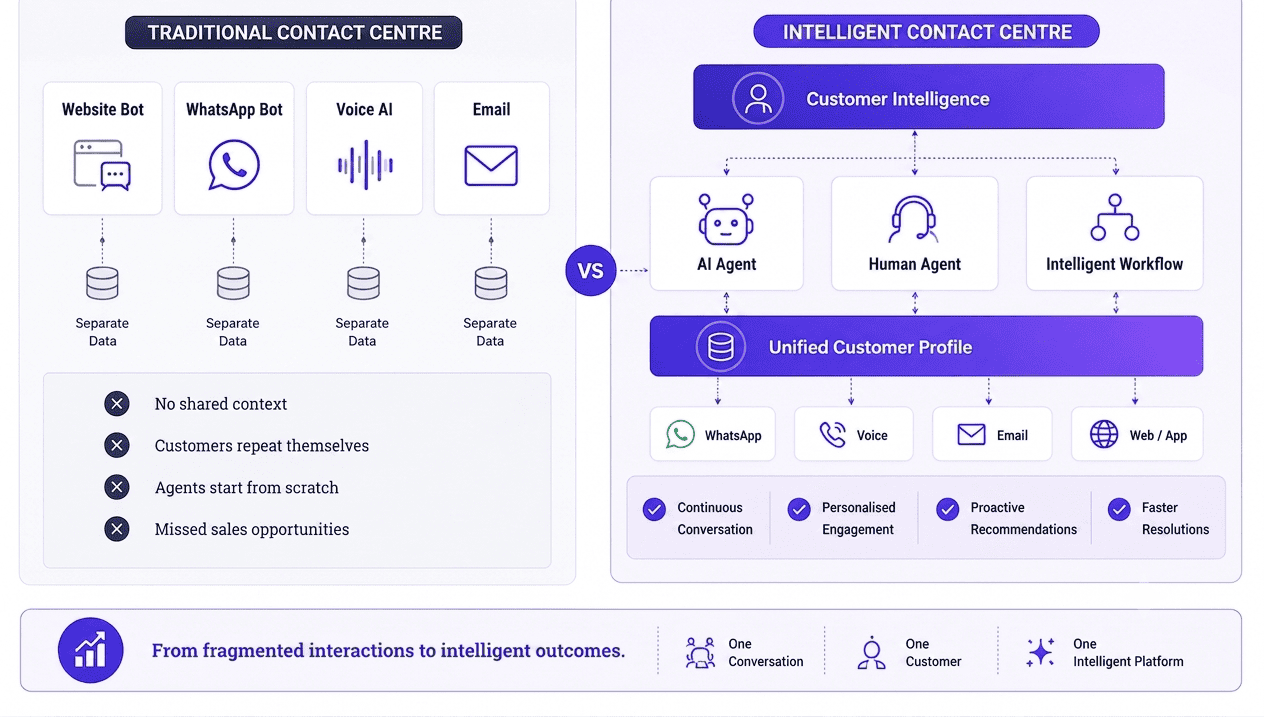
That level of intelligence isn’t possible when every channel operates independently. If a Chatbot, voice system and messaging platform each maintain their own history, every conversation starts with only part of the picture. Customers repeat themselves, agents lose valuable context and opportunities to personalise or engage proactively are easily missed.

Traditional vsIntelligent Contact Centres

A unified customer view changes that. By bringing every interaction into one continuously updated profile, AI agents, human advisors and automated workflows all work from the same context. The result is more personalised engagement, smoother handoffs and better business outcomes across the entire customer journey.

Trust Makes AI Scalable

Customers are increasingly comfortable interacting with AI, provided the experience is transparent, secure and reliable. They want to know when they’re speaking with AI, trust that their information is handled responsibly and have confidence they can reach a human whenever the situation calls for it.

For organisations, trust extends beyond the customer experience. It depends on strong governance, secure access controls, audit trails and clear rules that define when AI should act autonomously and when decisions should be escalated. These safeguards aren’t barriers to innovation—they’re what allow AI to be deployed confidently at enterprise scale.

When trust is built into every interaction, organisations can automate more confidently, deliver more consistent experiences and strengthen customer relationships over the long term.

A Buyer's Checklist for an AI-Powered Contact Center

When evaluating an AI-powered contact center, look beyond automation. The real differentiator is whether the platform can improve customer experience while delivering measurable business outcomes.

Unified customer intelligence that maintains one continuously updated customer profile across every interaction.

AI agents capable of resolving routine enquiries while recognising when human expertise is required.

Omnichannel continuity so conversations move seamlessly between WhatsApp, voice, email, web and mobile.

Proactive engagement that identifies churn risks, cross-sell opportunities and the next best action before customers reach out.

Enterprise integrations with CRM, contact center, ERP and business applications to provide real-time context.

Governance and security with role-based access, audit trails and human oversight built into every workflow.

Business analytics that measure customer satisfaction, retention, revenue opportunities and operational performance—not just ticket volumes.

Contact Center Revenue Engine

How Worktual Enables a Revenue-Driven Contact Center

Building a revenue-driven contact center requires more than adding AI to existing systems. It calls for a platform that brings together customer intelligence, automation and human expertise, so every interaction is informed by the complete customer journey rather than a single touchpoint.

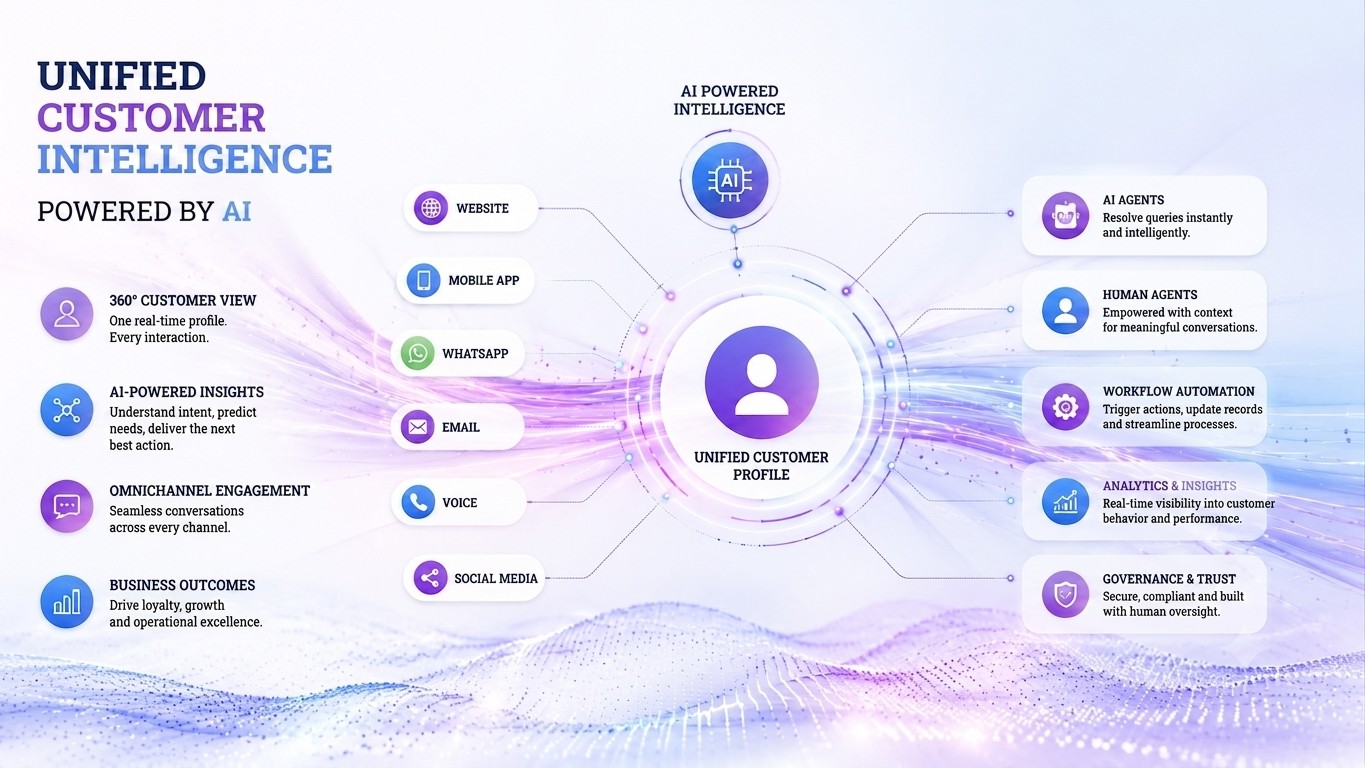
Worktual does this through AI agents, an Intelligent CRM and its Cognitive CDP, which continuously unifies customer data from every interaction into a single, real-time customer profile. That shared intelligence enables personalised engagement, proactive recommendations and seamless transitions between AI and human advisors, regardless of the channel.

Workflow automation coordinates actions across departments, while real-time analytics provide visibility into customer behaviour, operational performance and business outcomes. Together, these capabilities help organisations transform their contact center from a reactive support function into a strategic driver of customer loyalty, operational efficiency and growth.

Conclusion

The contact center is no longer just a place where customer issues are resolved. With the right combination of customer intelligence, AI and human expertise, it becomes a strategic function that strengthens relationships, protects revenue and creates new opportunities for growth.

The organisations leading this shift aren’t simply deploying more AI. They’re bringing every interaction together through a unified customer view, enabling personalised engagement, proactive service and better business decisions at every stage of the customer journey. As customer expectations continue to evolve, the contact center will increasingly be defined not by how efficiently it resolves issues, but by the value it creates for both customers and the business.

Book a Free Demo

Frequently Asked Questions

1. What does it mean to turn a contact center into a revenue engine?

It means using every customer interaction to create business value—not just resolve issues. AI-powered contact centers help improve retention, identify sales opportunities, strengthen customer relationships and contribute to long-term revenue growth.

2. How does AI help contact centers drive business growth?

AI analyses customer interactions, identifies intent, recommends the next best action and automates routine enquiries. This allows organisations to deliver more personalised experiences while enabling human advisors to focus on higher-value conversations.

3. Why is a unified customer view important?

A unified customer view brings together data from every interaction into a single, real-time profile. This gives AI agents and human advisors the context they need to deliver consistent, personalised experiences across every channel.

4. Can AI replace human contact center agents?

No. AI is most effective when it automates routine interactions and supports decision-making, while human advisors handle complex conversations that require judgement, empathy or negotiation.

5. How does Worktual support modern contact centers?

Worktual combines AI agents, an Intelligent CRM and its Cognitive CDP—which continuously unifies customer data into a single, real-time customer profile—to deliver personalised engagement, seamless omnichannel experiences and intelligent workflow automation from one platform.