Best Salesforce Alternative 2026

Insights / Best Salesforce Alternative 2026

Best Salesforce Alternatives

AI-Native CRM That American Revenue Teams Actually Adopt

It’s 6:15pm on a Tuesday in Austin, and a rep has just wrapped her third demo of the day. She knows she should log notes in Salesforce before heading out. She also knows it’ll eat fifteen minutes she doesn’t have, so it waits until tomorrow, half-remembered.

Salesforce is still the largest CRM platform on the market, but adoption and complexity have become real obstacles, and revenue teams increasingly want automation, not more data entry. That’s why so many US companies are evaluating the best Salesforce alternative in 2026 — and why AI-native CRM platforms are changing what teams expect a CRM to do.

  • Why More US Companies Are Looking Beyond Salesforce in 2026
  • What Is an AI-Native CRM?
  • What Revenue Teams Actually Need From a CRM in 2026
  • Salesforce vs AI-Native CRM: Feature Comparison
  • Signs Your Company Has Outgrown Salesforce
  • Best Salesforce Alternatives in 2026
  • Why AI-Native CRM Delivers Better User Adoption
  • Migration Checklist: Moving From Salesforce Without Chaos
  • FAQs

Why More US Companies Are Looking Beyond Salesforce in 2026

A few pressures show up again and again in these evaluations: rising license costs, consulting dependency, customization complexity, slow implementation, low sales-team adoption, and fragmented tech stacks that force reps across too many disconnected tools.

Common Salesforce Pain PointBusiness Impact
Manual CRM updatesLower rep productivity
Complex workflowsLonger onboarding
Multiple add-onsHigher total cost
Poor adoptionInaccurate forecasting

What Is an AI-Native CRM?

An AI-native CRM isn’t “CRM plus a chatbot.” It’s a platform where AI is built into the core architecture from the start — AI that executes work, not just reports on it.

Traditional CRMAI-Native CRM
Stores customer dataActs on customer data
Manual updatesAutomatic updates
Static reportsPredictive insights
Users search for informationAI surfaces next actions

What Revenue Teams Actually Need From a CRM in 2026

The asks look similar across functions: sales wants AI call summaries, lead prioritization, and pipeline forecasting; marketing wants AI segmentation and journey automation; customer success wants churn prediction and health scoring; support wants an omnichannel inbox and AI ticket routing. The common thread is a platform that acts on customer data, not just stores it.

Salesforce vs AI-Native CRM: Feature Comparison

SalesforceAI-Native CRM
Pricing transparencyLimited, tiered add-onsBundled, more transparent
Implementation timeMonthsWeeks
Ease of useSteep learning curveBuilt for daily use
AI automationAdd-on licensingNative and included
Omnichannel communicationFragmented across toolsUnified inbox
Workflow automationRequires configuration or consultantsBuilt-in, low-code
ForecastingManual, rep-dependentAI-driven, predictive
Mobile experienceFunctional but heavyMobile-first
Integration ecosystemLargest on the marketModern, API-first, growing fast
Time to ROISix to twelve-plus monthsWeeks to a few months

Signs Your Company Has Outgrown Salesforce

  • Reps spend hours record updating CRM
  • Forecasts are consistently inaccurate
  • AI capability requires multiple third-party tools
  • Adoption sits below 60%
  • Customer data is scattered across disconnected systems
  • Every workflow change requires admin or consultant support

Best Salesforce Alternatives in 2026

Here’s how seven of the leading options compare on strengths and trade-offs.

1. Worktual

Best for: revenue teams wanting unified customer intelligence

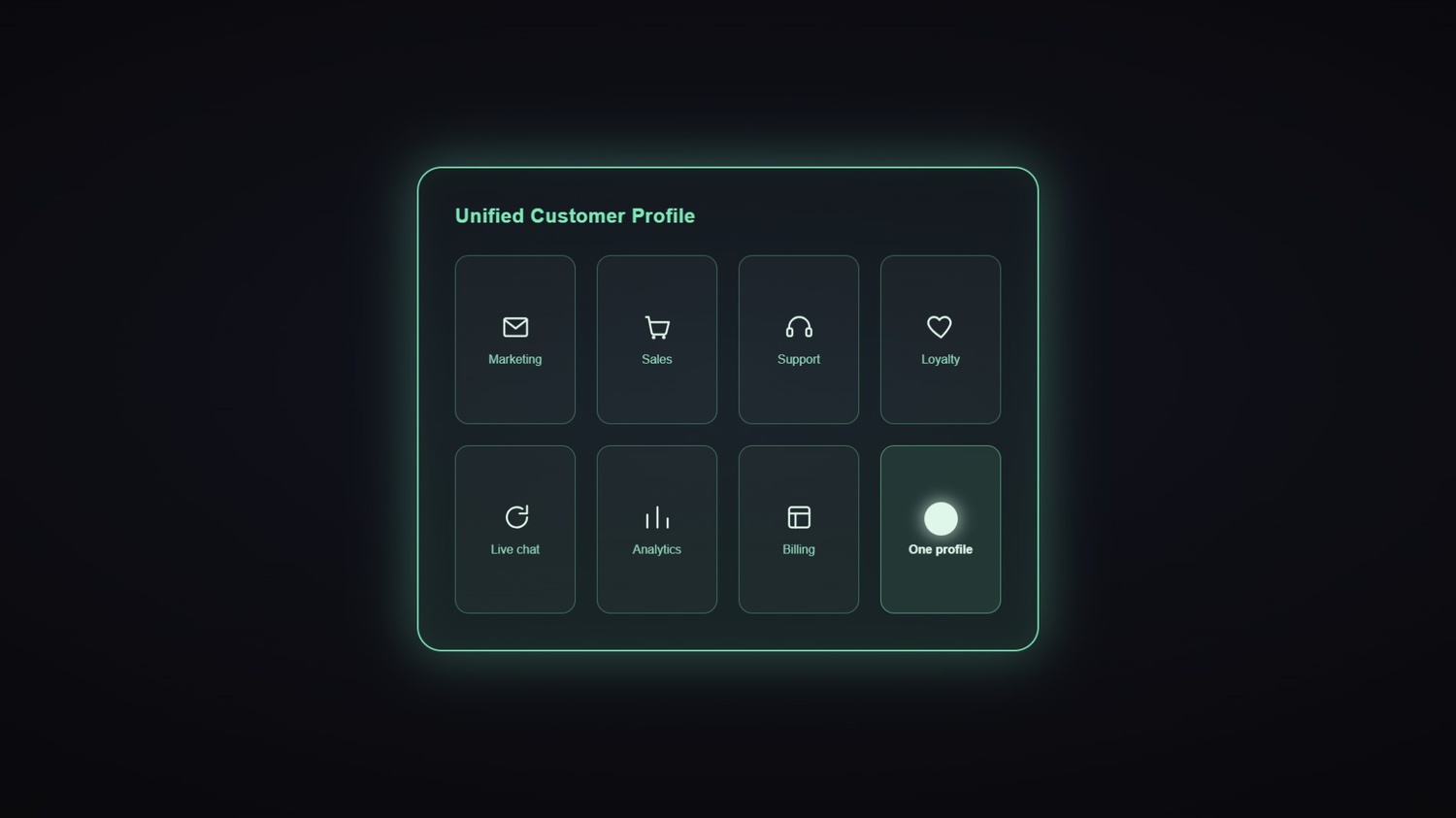
  • AI-native architecture built around Worktual’s Cognitive CDP unifying voice, web, email, and support into one continuously updated customer profile
  • Built-in Next-Best-Action automation without stitching together separate AI tools
  • Not partner-dependent; teams deploy and get support directly

Considerations: a newer platform than the established CRM incumbents.

Alternative to salesforce

2. HubSpot

Best for: marketing-led growth teams

  • Best-in-class inbound marketing and content tooling
  • Breeze AI runs across the platform
  • Strong free/entry tier for early-stage companies

Considerations: costs scale steeply once advanced automation or AI is needed, and enterprise-tier pricing can approach Salesforce levels.

3. Zoho CRM

Best for: cost-conscious teams

  • Significantly more affordable than the major enterprise suites
  • Zia AI covers prediction, lead scoring, and sentiment analysis
  • One of the broadest feature sets at its price point

Considerations: AI capabilities are less deeply embedded than purpose-built AI-native platforms, and getting full value typically requires configuration.

4. Freshsales (Freshworks)

Best for: fast-growing small and mid-size teams

  • Freddy AI covers lead scoring, deal insights, and activity capture
  • Native built-in telephony, unlike competitors that require a third-party add-on
  • Clean, fast-to-adopt interface with a genuinely usable free tier

Considerations: reporting is comparatively inflexible, and several valuable features sit behind higher-priced plans.

5. Pipedrive

Best for: small, focused sales teams

  • The cleanest visual, pipeline-first UX in the category
  • Simple to set up and use without dedicated admin support
  • Strong fit for short, predictable sales cycles

Considerations: primarily designed for sales, with marketing and support capabilities requiring additional tools or integrations.

6. Microsoft Dynamics 365

Best for: Microsoft-first organizations

  • Native integration with Teams, Outlook, and the Power Platform
  • Copilot for Sales sits directly inside tools reps already use daily

Considerations: full value depends on already being deep in the Microsoft ecosystem, and Sales, Service, and Marketing are often licensed independently.

7. Creatio

Best for: organizations with complex, well-defined workflows

  • No-code workflow engine lets business teams build automations without developer time
  • Combines CRM and process automation on a single platform

Considerations: enterprise deployments typically involve multi-year commitments and higher minimum spend.

Why AI-Native CRM Delivers Better User Adoption

Reps don’t dislike CRM; they dislike the admin that comes with it. AI-native platforms capture activity automatically, turning the CRM into an assistant instead of a chore, and giving managers cleaner data without chasing it:

  • Meeting ends → summary created automatically
  • Email sent → logged automatically
  • Deal changes → AI updates the pipeline
  • Renewal risk detected → alert created

This is the real reason AI-native platforms are becoming the CRM that sales reps actually use — forecasting improves naturally once the underlying data is actually complete.

Migration Checklist: Moving From Salesforce Without Chaos

  1. Audit current Salesforce usage
  2. Export and clean data
  3. Map existing workflows
  4. Prioritize high-impact automations
  5. Run a pilot with one sales team
  6. Train users on AI workflows
  7. Measure adoption and response time
  8. Roll out company-wide

Is Salesforce Still the Right Choice?

Salesforce may still be the right choice for large enterprises with heavy customization needs, complex compliance requirements, or deep reliance on its partner ecosystem. AI-native CRM tends to be the better fit for fast-growing companies, revenue-focused teams, and any organization prioritizing quick ROI and automation over extensive bespoke configuration. Neither is categorically better — the right answer depends on what your team actually needs to run its day-to-day motion.

Conclusion

The CRM market is shifting from systems of record to systems of intelligence. Salesforce remains capable and deeply established, but its complexity and cost structure are prompting more revenue teams to look elsewhere. The best Salesforce alternative isn’t the one with the longest feature list — it’s the one your revenue team actually adopts. Evaluate any platform, including Salesforce itself, against the same criteria: adoption, automation, implementation speed, and measurable revenue outcomes.

FAQs

1. What is the best Salesforce alternative in 2026?

It depends on your team size and priorities, but AI-native platforms like Worktual, HubSpot, and Microsoft Dynamics 365 are among the most commonly evaluated options this year.

2. Why are companies replacing Salesforce?

Rising license costs, consulting dependency, slow implementation, and low sales-team adoption are the most commonly cited reasons.

3. What is an AI-native CRM?

A CRM where AI is built into the core platform architecture from the start, executing work like follow-ups and data entry rather than just reporting on it.

4. Is AI-native CRM better than traditional CRM?

For teams struggling with adoption and manual admin, yes, AI-native platforms tend to reduce the busywork that causes reps to avoid the CRM in the first place.

5. Which Salesforce alternative is best for small businesses?

Freshsales, and Pipedrive are commonly evaluated by smaller teams looking for lower cost and faster setup.

6. Can I migrate from Salesforce without losing data?

Yes, with a structured plan exporting and cleaning data before mapping it to your new platform meaningfully reduces the risk of data loss.

7. How long does Salesforce migration usually take?

It varies by data volume and workflow complexity, but a phased rollout with a single-team pilot typically de-risks the timeline regardless of platform size.

8. What features should I prioritize in a Salesforce alternative?

Native AI automation, omnichannel communication, transparent pricing, and a realistic implementation timeline matter more than a long feature list.

9. Can AI automate CRM data entry?

Yes — automatic activity logging, call summaries, and pipeline updates are now standard features across AI-native platforms.

10. How does AI improve sales productivity?

By removing manual admin — logging calls, drafting follow-ups, and updating records automatically, so reps spend more time selling and less time on data entry.

Related Posts

Unified Intelligence for Media & Advertising

Unified Intelligence AI for Media & Advertising: Boosting Audience Engagement, Ad Revenue Yield, and Advertiser Retention

Media and advertising organizations operate in an environment shaped by fragmented audiences, platform competition, evolving consumption behaviors, and growing pressure on commercial performance. Consumers expect highly relevant and seamless experiences across websites, mobile apps, streaming platforms, newsletters, and social channels, while advertisers expect measurable outcomes, transparency, and responsive campaign execution. Yet many organizations continue managing disconnected operational systems, siloed audience intelligence, and fragmented engagement journeys. When relevance declines, audience attention falls rapidly. When reporting delays increase or inventory performance weakens, revenue pressure escalates. In this environment, audience engagement strategies media leaders depend on have become central to sustainable commercial growth and profitability.

Top 10 AI-Native SaaS Companies in USA 2026

Top 10 AI-native SaaS Companies in the USA (2026): Transforming Customer Experience, Business Growth and Intelligent Engagement

Retail organizations operate in an increasingly complex environment where customer expectations, digital engagement behavior, and omnichannel commerce continue to evolve rapidly. Customers now interact with brands across ecommerce websites, mobile applications, physical stores, loyalty programmes, social commerce platforms, marketplaces, customer support systems, and conversational interfaces before making purchase decisions. However, many retailers still operate with disconnected customer data environments that limit visibility into customer intent, behavioral patterns, and engagement activity. As a result, customer journeys become fragmented, personalization weakens, and conversion opportunities are frequently lost across the retail lifecycle.

AI-Native Unified Customer Intelligence Platform

How to Turn E-commerce Traffic into Long-Term Revenue with Worktual’s AI Chatbot, AI Omnichannel Contact Center & Intelligent Ticketing

Every online order creates a customer journey, and every customer journey creates support requests. As e-commerce businesses scale, customer interactions multiply across Shopify, Big Commerce, marketplaces such as Amazon and Walmart Marketplace, and brick-and-mortar locations. Delivering fast, consistent support has become increasingly difficult, turning