

Contact Center AI: Guide, Benefits & Top Solutions 2026
Insights / Contact Center AI: Guide, Benefits & Top Solutions 2026
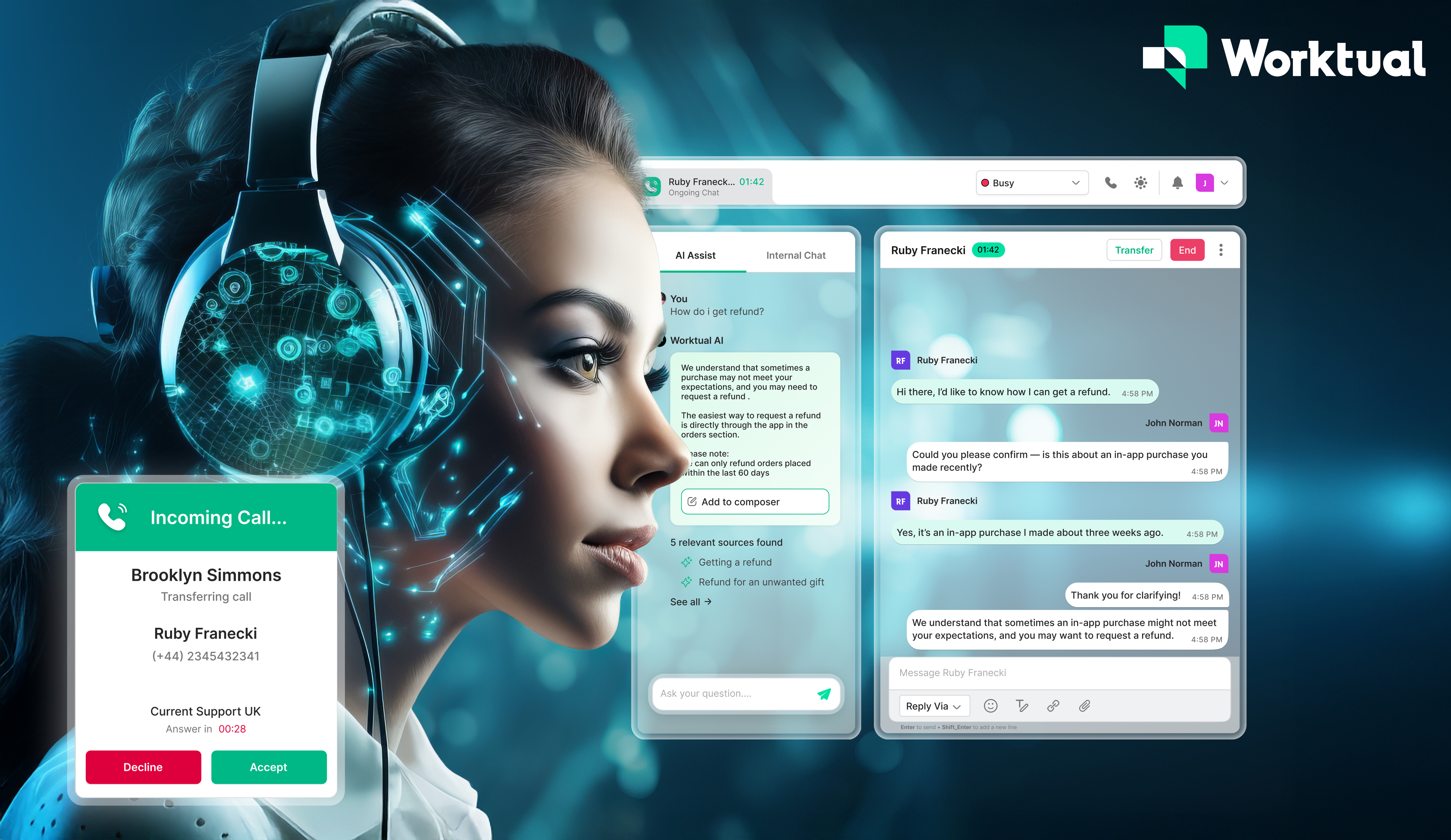
Table of Contents
Contact center AI is the application of artificial intelligence — including conversational AI, generative AI, machine learning, and speech analytics — to automate, enhance, and optimise customer interactions in contact centers.
It enables businesses to resolve customer queries 24/7 without agent involvement for routine interactions, provide real-time AI assistance to human agents during complex calls, and generate operational intelligence from every conversation.
In 2026, the most advanced contact center AI systems are agentic — they reason, decide, and act autonomously across voice, chat, email, and messaging channels simultaneously.
Customer expectations have never been harder to meet at scale. By 2026, the average enterprise contact center handles millions of interactions per year — a volume that makes human-only resolution not just expensive, but fundamentally impossible to sustain at quality.
The answer is contact center AI. Not the rule-based chatbots of the 2010s, but genuinely intelligent systems that understand intent, access live business data, and resolve complex queries with the same quality a trained agent delivers — at unlimited scale, at any hour.
This guide covers everything: what contact center AI is, how conversational AI and generative AI are transforming contact centers, the ROI case, top solutions in 2026, and a step-by-step implementation framework.
Customer support becomes complicated when queries accumulate and responses slow down.
With frustrated customers quitting on you and agents feeling exhausted trying to retain them, the situation is going beyond your control. As issues increase, you feel trapped, with no clear way to regain control.
You try new tools, scripts, and training sessions, but nothing feels like enough to close the gap. Meanwhile, customers start comparing their experience with others and quietly realise that your competitors make it easier to get help and are ready to make the shift.
A way exists to change this story, and it delivers more clarity than expected. The approach restores control and confidence, keeping both customers and agents happy.
Ready to discover what transforms the entire experience?
- What is contact center AI?
- Conversational AI for Contact Centers
- Generative AI in Contact Centers: Beyond Automation
- What Is a Cognitive Contact Center?
- Why it matters: Align with enterprise priorities
- How contact center AI works
- Contact Center AI ROI: The Business Case in Numbers 2026
- How to get started with contact center AI
- Future of contact center AI
- FAQS
What is Contact Center AI?
Contact center AI refers to the full stack of artificial intelligence technologies deployed within a customer contact center to automate interactions, assist human agents in real time, and generate intelligence from every customer conversation.
Unlike the automated phone menus and basic chatbots of previous decades, modern contact center AI uses large language models (LLMs), natural language processing (NLP), machine learning, and speech recognition to understand what customers actually mean — not just what keywords they use — and to take appropriate action across any channel.
A 2026 contact center AI system might simultaneously: answer a customer’s delivery query via WhatsApp in under 3 seconds; coach a human agent through a complex complaint call with real-time response suggestions; generate a post-call summary and CRM update automatically; and alert a supervisor to a sentiment pattern emerging across 50 concurrent calls.
This is no longer experimental. Gartner forecasts conversational AI will cut contact centre labour costs by $80 billion in 2026. [STAT – Source: Gartner] IBM research found contact center AI reduces average handling time by 35%. [STAT – Source: IBM] The question for most enterprises is not whether to deploy contact center AI — it is which system to choose and how to implement it.
Contact Center AI helps businesses automate several customer functions with AI capabilities. This automation helps streamline customer interactions at multiple levels. It boosts the productivity of your service team by leveraging capabilities like natural language processing, machine learning, large language models, real-time coaching, and speech analytics.
Just like an airport’s traffic control system, Contact Center AI mitigates confusion, keeps conversations flowing, and ensures everyone hears the right words at the right time. While it doesn’t replace human agents, it instead provides them with the right information and precise suggestions when things spiral.
Conversational AI for Contact Centers
Conversational AI is the most impactful application of artificial intelligence in the contact center environment. Where traditional automation followed scripts and menus, conversational AI holds genuine multi-turn dialogues — understanding intent, maintaining context across an entire conversation, and adapting responses based on what has already been said.
In a contact center deployment, conversational AI handles the full customer interaction lifecycle: it greets the customer, identifies their intent through natural dialogue, accesses relevant data from integrated systems, takes action to resolve the query (or routes to a human with full context pre-loaded), and closes the interaction with appropriate follow-up.
What Conversational AI Enables in a Contact Center
• Omnichannel consistency: The same conversational AI handles queries via voice, web chat, WhatsApp, SMS, and email — maintaining context when a customer switches channels mid-interaction.
• Intent understanding beyond keywords: A customer saying ‘I’ve been waiting two weeks and nothing has arrived’ is understood as a delivery complaint — the AI identifies the package, checks tracking, and resolves the issue without the customer stating ‘track order’.
• Multi-turn dialogue: Unlike FAQ bots, conversational AI remembers what was said earlier in the conversation. It does not ask a customer to repeat their account number after they have already provided it.
• Proactive engagement: Advanced conversational AI initiates outbound interactions — notifying customers of delays before they call to complain, reducing inbound volume by resolving issues pre-emptively.
Forrester found that organisations deploying conversational AI in contact centers achieve a 3-year ROI of 331-391% with payback under 6 months. The compounding effect of every conversation teaching the system more about your customers creates a widening competitive advantage that template-based solutions cannot replicate.
Worktual’s Lola is an agentic conversational AI built specifically for enterprise contact center deployments — maintaining full conversation context across all channels and integrating with your CRM, ERP, and ticketing systems for real-time resolution.
Generative AI in Contact Centers: Beyond Automation
Generative AI represents the next evolution beyond conversational AI in the contact center. Where conversational AI understands and responds, generative AI creates — producing original content, summaries, coaching scripts, and knowledge-base articles in real time from the context of each individual customer interaction.
Key Generative AI Use Cases in Contact Centers
• Real-time call summarisation: GenAI generates accurate call summaries automatically at conversation end — eliminating the 3-5 minutes agents typically spend on post-call wrap-up. At 1,000 calls/day, this saves 50-80 agent hours daily.
• Auto-generated agent responses: GenAI drafts contextually appropriate responses for agents to review and send — reducing response time from minutes to seconds without sacrificing personalisation.
• Dynamic knowledge generation: When an agent encounters a query with no existing knowledge article, GenAI generates a draft answer from related documentation — building the knowledge base as the contact center operates.
• Post-call quality analysis: GenAI analyses call transcripts to score agent performance, identify compliance risks, and surface coaching opportunities — replacing manual QA sampling with 100% interaction coverage.
• Sentiment-driven escalation: GenAI monitors real-time conversation sentiment and automatically escalates to a supervisor when a customer’s frustration exceeds a threshold — before the interaction deteriorates.
McKinsey estimates generative AI could automate 30-40% of contact center agent work by 2026 — not by replacing agents, but by eliminating the administrative and cognitive overhead that consumes up to 40% of their working time.
What Is a Cognitive Contact Center?
A cognitive contact center is the most advanced evolution of AI-enabled customer service. It goes beyond automation (handling routine tasks) and beyond AI-assistance (supporting agents) to operate with genuine intelligence: learning from every interaction, adapting to new patterns, and improving its own performance continuously without manual retraining.
| CAPABILITY | TRADITIONAL CC | AI-ASSISTED CC | COGNITIVE CC (LOLA) |
|---|---|---|---|
| Query Resolution | Script menus only | AI assists agents | AI resolves autonomously |
| Learning | Never improves | Periodic retraining | Continuous self-learning |
| Context Memory | None | Single session | Cross-session + long-term |
| Emotional Intelligence | None | Sentiment flagging | Real-time sentiment + adaptation |
| Channel Coverage | 1-2 channels | Multi-channel silos | True omnichannel unified |
| Predictive Capability | None | Basic reporting | Predicts issues before they escalate |
Worktual’s Lola operates as a cognitive AI — she does not just execute instructions, she reasons about the best path to resolution for each unique customer interaction. Every call she handles makes her understanding of your customers, products, and processes more accurate. This compounding intelligence is the defining characteristic of a cognitive contact center.
Why It Matters: Align with Enterprise Priorities
For most companies, the contact center is not just a support function. It is the face of their brand. That is why contact center AI aligns closely with bigger business goals like improving customer experience, driving efficiency, and scaling operations without adding massive overhead.
Think of it like expanding an airport to handle more flights without doubling the staff. With the right AI in place, businesses can handle growing customer demands while keeping service quality consistent. AI acts as an extra layer of Unified intelligence that reduces friction for both customers and employees.
AI's Role in the Contact Center
In several aspects, you can equate a contact center to an airport control room. The contact center analyzes patterns, listens to conversations, and gives real-time support for agents. The agenda behind these functionalities is to give quick, helpful answers to customers around the clock.
Salesforce found that 26% of agents say they often lack context about a customer’s situation. When an agent is in a complex conversation, AI can provide on-screen suggestions, summaries, relevant knowledge (help docs), and customer history without delay.
This real-time agent assistance is one of the most impactful roles of an AI contact center. As a result, agents are not scrambling for information, and customers do not have to repeat themselves or wait for long times.
How Contact Center AI Works

How Contact Center AI Works
Modern contact center AI operates across four interconnected layers, each contributing to the seamless experience customers receive and the operational intelligence businesses gain.
Layer 1: Customer-Facing Automation
When a customer initiates contact — via voice call, web chat, WhatsApp, or email — the AI layer processes their input in real time. For voice: Automatic Speech Recognition (ASR) transcribes speech, NLU identifies intent, and the system generates a contextually appropriate response delivered via neural text-to-speech. For text channels: NLP processes the message, intent is classified, and a generated response is delivered in under 2 seconds. If the AI can resolve the query — which it does for 50-70% of routine interactions — the conversation closes without agent involvement.
Layer 2: Agent Co-Pilot
For interactions routed to human agents, AI operates as an active co-pilot throughout the call. It displays the customer’s full interaction history, suggests responses based on conversation context, retrieves relevant knowledge articles in real time, monitors sentiment, and flags compliance risks. Agents with AI co-pilot support handle 35% more interactions per shift and achieve measurably higher CSAT scores.
Layer 3: Supervisor Intelligence
At the management layer, AI provides real-time visibility across all concurrent interactions — identifying emerging complaint patterns, detecting agent performance issues, flagging escalation risks, and alerting supervisors to interactions that require human intervention. This layer replaces sample-based QA monitoring with 100% interaction coverage.
Layer 4: Post-Interaction Intelligence
After each interaction, generative AI generates call summaries, updates CRM records, categorises the query type, scores the interaction for quality and compliance, and feeds insights into the business intelligence layer. Over time, this creates a comprehensive operational dataset that identifies product issues, agent training needs, and customer experience improvement opportunities that were previously invisible.
Contact Center AI ROI: The Business Case in Numbers 2026
The financial case for contact center AI is no longer based on projections — it is built on enterprise deployment data across hundreds of production implementations.
| ROI METRIC | FIGURE | SOURCE |
|---|---|---|
| 3-year ROI for enterprise voice AI deployments | 331-391% | Forrester Consulting, 2026 |
| Contact centre labour cost savings in 2026 | $80 billion | Gartner, 2026 |
| Reduction in average handling time (AHT) | 35% | IBM Research |
| Cost per contact — AI vs human agent | $0.40 vs $8-12 | Teneo.ai / Ringly.io, 2026 |
| First-contact resolution improvement (AI vs IVR) | 50-70% FCR | Retell AI, 2026 |
| Agent productivity increase with AI co-pilot | 35% more interactions/shift | IBM Research |
| Reduction in post-call wrap-up time | 80% (GenAI summarisation) | McKinsey Global Institute |
| Customer satisfaction (CSAT) improvement | +22% average | Worktual client data |
| Contact centre AI market size 2026 | $15.12 billion | MarketsandMarkets, 2026 |
| Projected market size 2030 | $47.82 billion | MarketsandMarkets, 2026 |
Top Contact Center AI Solutions in 2026
The contact center AI market has produced several distinct categories of solution, each suited to different business models, sizes, and technical requirements. The following platforms represent the leading options in 2026.
| PLATFORM | KEY STRENGTH | BEST FOR | WORKTUAL COMPARISON |
|---|---|---|---|
| Worktual (Lola) | Bespoke agentic AI — built for your business | Enterprise requiring permanent competitive advantage | Unique: every deployment is custom-built, not a shared template |
| Genesys Cloud | Enterprise contact centre platform | Large CC with complex routing requirements | Template-based; Worktual builds to your specific architecture |
| NICE CXone | AI analytics and workforce management | Compliance-heavy industries (financial services) | Analytics-strong but lacks bespoke conversational AI depth |
| Google CCAI | Strong NLP on Google infrastructure | Tech companies on Google Cloud | Infrastructure layer only — requires extensive development work |
| Salesforce Service Cloud | CRM-native AI for Salesforce users | Salesforce-centric organisations | Deep Salesforce integration but limited outside the ecosystem |
| Amazon Connect | Scalable cloud CC on AWS | AWS-native businesses | Infrastructure platform — requires significant build for AI features |
How to Get Started with Contact Center AI
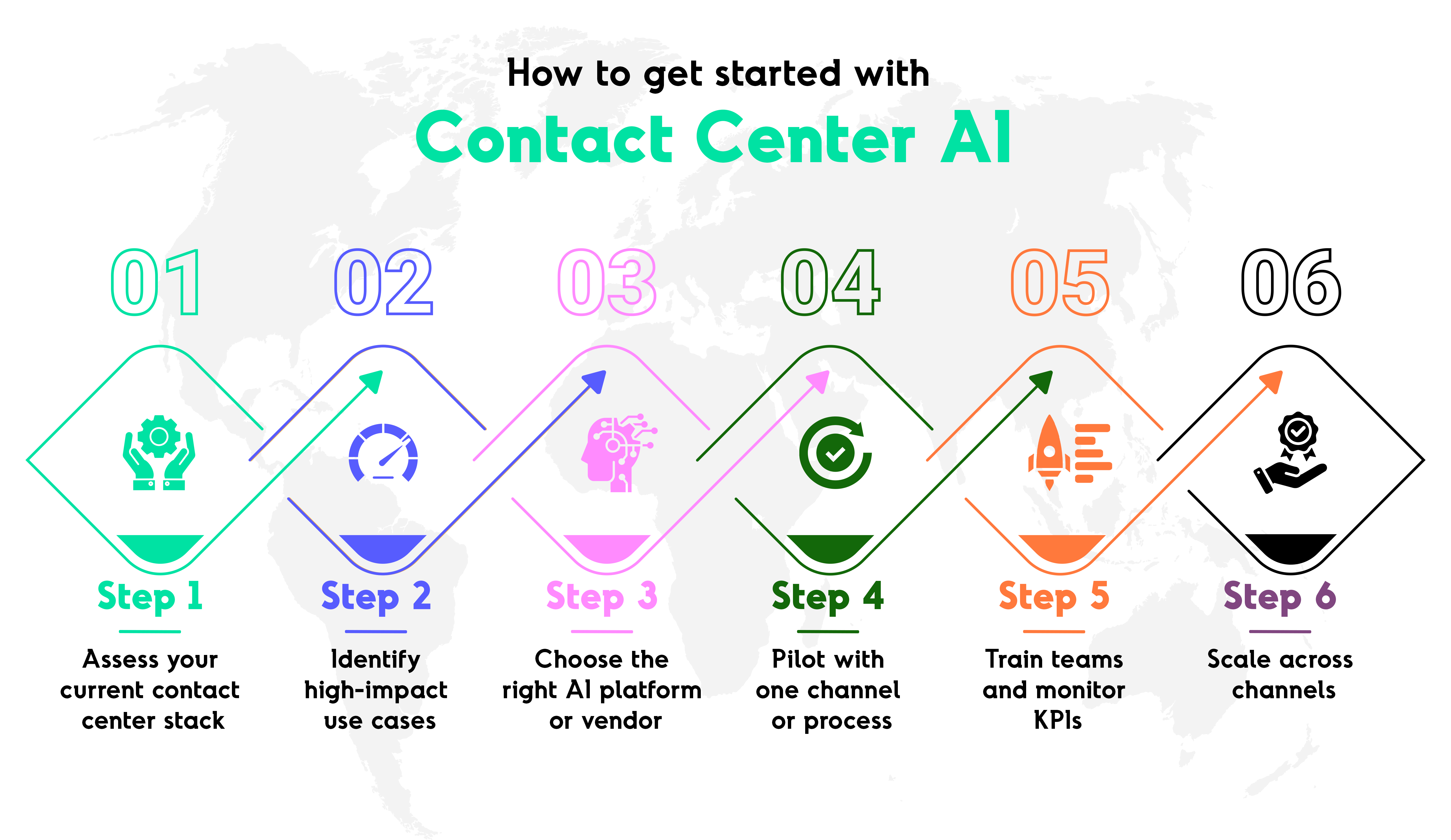
Implementing contact center AI successfully requires a structured approach. These six steps reflect best practice across enterprise deployments in 2026, minimising risk while accelerating time-to-value.
1. Audit Your Current Contact Center Stack:
Before adding AI, understand what you have. Document your current telephony infrastructure, CRM, ticketing system, knowledge base, and chat platforms. Identify integration points and gaps. This audit determines which AI capabilities can be deployed quickly versus which require infrastructure work first.
2. Identify High-Impact Use Cases:
Not all processes benefit equally from AI. Analyse your top 20 query types by volume. Categorise each as: fully automatable (FAQ, order status, balance checks), agent-assistable (complaints, technical issues), or human-only (crisis, high-emotion, legal). Start with the automatable category — typically 40-60% of contact centre volume.
3. Choose Between Bespoke and Template Solutions:
This decision defines your ceiling. Template platforms deploy the same architecture across thousands of businesses — any advantage is temporary. Bespoke contact center AI is built around your specific processes, customers, and competitive positioning. Worktual builds bespoke agentic AI exclusively — meaning your deployment creates proprietary intelligence that cannot be replicated.
4. Pilot on One Channel or Process:
Begin with a single high-volume, low-complexity channel — typically web chat for FAQ resolution or inbound voice for a single product line. Measure: containment rate, CSAT delta, AHT impact, and escalation rate. A successful pilot provides the data needed to justify full deployment and identifies any integration issues before they affect all customers.
5. Train Your Teams and Define KPIs:
AI changes how contact centres operate, not just what they do. Agents need training on how to work with AI co-pilot tools — when to trust suggestions, when to override, and how to handle escalations from AI interactions. Define KPIs before launch: target containment rate, CSAT improvement, AHT reduction, and FCR improvement. Without pre-defined targets, progress is unmeasurable.
6. Scale Across Channels with Continuous Optimisation:
Once the pilot channel proves ROI, extend to additional channels in sequence. Each channel adds data to the AI’s understanding of your customers, creating the compounding intelligence effect that makes cognitive contact centers progressively more valuable over time. Schedule quarterly optimisation reviews to analyse query pattern changes and retrain where needed.
Key considerations before implementation
- Integration with legacy systems is a key priority. Unfortunately, many contact centers still run on legacy systems. So AI has to blend into these environments without affecting their operations.
- AI must respect compliance regulations like HIPAA and GDPR to protect sensitive customer information.
- Ethical use of AI is imperative. Business tools and AI should be designed to support, not manipulate, customer interactions.
- Understanding workforce readiness plays a crucial role in complete adoption. AI changes how agents work, so proper support training is essential for better adoption.
- While implementing a new system, it is best to understand the true cost of ownership. When you have a bigger picture of software, integration, maintenance, and potential scalability expenses, you avoid financial surprises.
Future of Contact Center AI
The most effective contact centers will move towards a hybrid approach. They will pick AI to handle routine tasks, and humans to step in for emotionally demanding conversations.
Real-time transcripts, chat summaries, customer information, and suggestions during live conversations are the areas where generative AI adds value. This helps in making interactions more efficient.
Sentiment analysis helps businesses understand customer moods to offer personalized service and give a heads-up to the human agent during handoffs.
Ready to Upgrade your Contact Center?
Contact center AI converts a cluttered, overwhelming environment into one that runs with clarity. It optimizes operations, extends help to teams, and gives customers quick solutions. The goal is not to replace human agents but to make them more effective and confident.
With the right approach, businesses can scale without worrying much about customer service. AI will keep it consistent and personalized. And the result? Loyal customers who receive reliable support from happier teams.
Discover how Worktual can help you build smarter, faster, and friendlier customer support for your business.
FAQs
1. What is contact center AI?
Contact center AI is the application of artificial intelligence — including conversational AI, generative AI, machine learning, and speech analytics — to automate customer interactions, assist human agents, and generate operational intelligence within a contact center. Modern systems resolve 50-70% of routine queries autonomously while providing real-time coaching and context to agents handling complex interactions.
2. What is the difference between a contact center AI and a traditional contact center?
A traditional contact center relies on human agents and IVR menus to handle all customer interactions. A contact center AI system resolves routine queries autonomously (without agent involvement), provides real-time AI co-pilot assistance to agents during complex calls, and generates post-call intelligence automatically. The result: 40% lower operational costs, 35% faster handling times, and measurably higher customer satisfaction scores.
3. What is conversational AI in a contact center?
Conversational AI in a contact center enables software systems to hold genuine multi-turn dialogues with customers — understanding intent, maintaining context across the full conversation, and taking action to resolve queries. Unlike IVR menus that require customers to select from options, conversational AI understands free-form natural language: a customer can say anything and the system comprehends the intent and responds appropriately.
4. How does generative AI improve contact center performance?
Generative AI in contact centers automates the administrative work that consumes 30-40% of agent time: call summaries, CRM updates, response drafting, and knowledge article creation. It also enables 100% QA coverage by analysing every interaction transcript rather than a manual sample. The most significant impact is on agent efficiency — AI-assisted agents handle 35% more interactions per shift at measurably higher quality.
5. What is a cognitive contact center?
A cognitive contact center uses AI that learns and adapts continuously — not just automating predefined processes but reasoning about the optimal resolution path for each unique interaction. It improves its own performance with every call, building an increasingly accurate model of your customers, products, and service processes. Worktual’s Lola is a cognitive AI — each deployment compounds in intelligence, creating a proprietary advantage unique to your business.
6. What ROI can a business expect from contact center AI?
Enterprises typically achieve a 3-year ROI of 331-391% from contact center AI deployments, with payback periods under 6 months (Forrester Consulting, 2026). Specific metrics include: 40% reduction in cost-per-contact (IBM), 35% faster average handling times, and 50-70% first-contact resolution rates on automated interactions. A contact center handling 1,000 calls/day at $10/call that automates 60% sees $2.2 million in annual cost savings.
7. What contact center AI tools and platforms are available in 2026?
The leading contact center AI platforms in 2026 include Worktual (bespoke agentic AI), Genesys Cloud (enterprise CC platform), NICE CXone (analytics-focused), Google CCAI (NLP infrastructure), Salesforce Service Cloud (CRM-native), and Amazon Connect (AWS-native). The key differentiator is whether the system is bespoke — built for your specific business — or a shared template deployed across thousands of clients.
8. How long does it take to implement contact center AI?
Implementation timelines depend on complexity and scope. A basic template-based chatbot for FAQ automation can go live in 2-4 weeks. A full enterprise contact center AI deployment — covering voice, chat, email, and deep CRM integration — typically takes 4-12 weeks. Worktual’s bespoke deployments follow a structured 6-step process from discovery to go-live, typically within 6-8 weeks, with a co-evolution model that continuously improves the system post-launch.
9. Is contact center AI GDPR compliant?
GDPR compliance for contact center AI requires: lawful basis for processing customer voice and text data, data minimisation in what is recorded and retained, the ability to fulfil subject access requests and right-to-erasure for interaction data, consent mechanisms for call recording, and appropriate data processing agreements with the AI vendor. Worktual builds GDPR compliance into every European deployment by default — contact us for specific compliance documentation.
10. Can contact center AI replace human agents?
Contact center AI is designed to augment, not replace, human agents. AI handles the 50-70% of interactions that are routine and resolvable without human judgment — freeing agents to focus on complex, high-empathy, and high-value interactions where human connection is essential. The most effective contact centers in 2026 operate a hybrid model: AI handles volume, humans handle complexity, and each interaction improves the AI’s accuracy for the next one.

Related Posts

Voicebots vs Voice AI Agents: Enterprise Customer Service in 2026
Customer support becomes complicated when queries accumulate and responses slow down.
With frustrated customers quitting on you and agents feeling exhausted trying to retain them, the situation is going beyond your control. As issues increase, you feel trapped, with no clear way to regain control.
Best Intercom Alternatives for 2026: Top Tools to Improve Customer Support
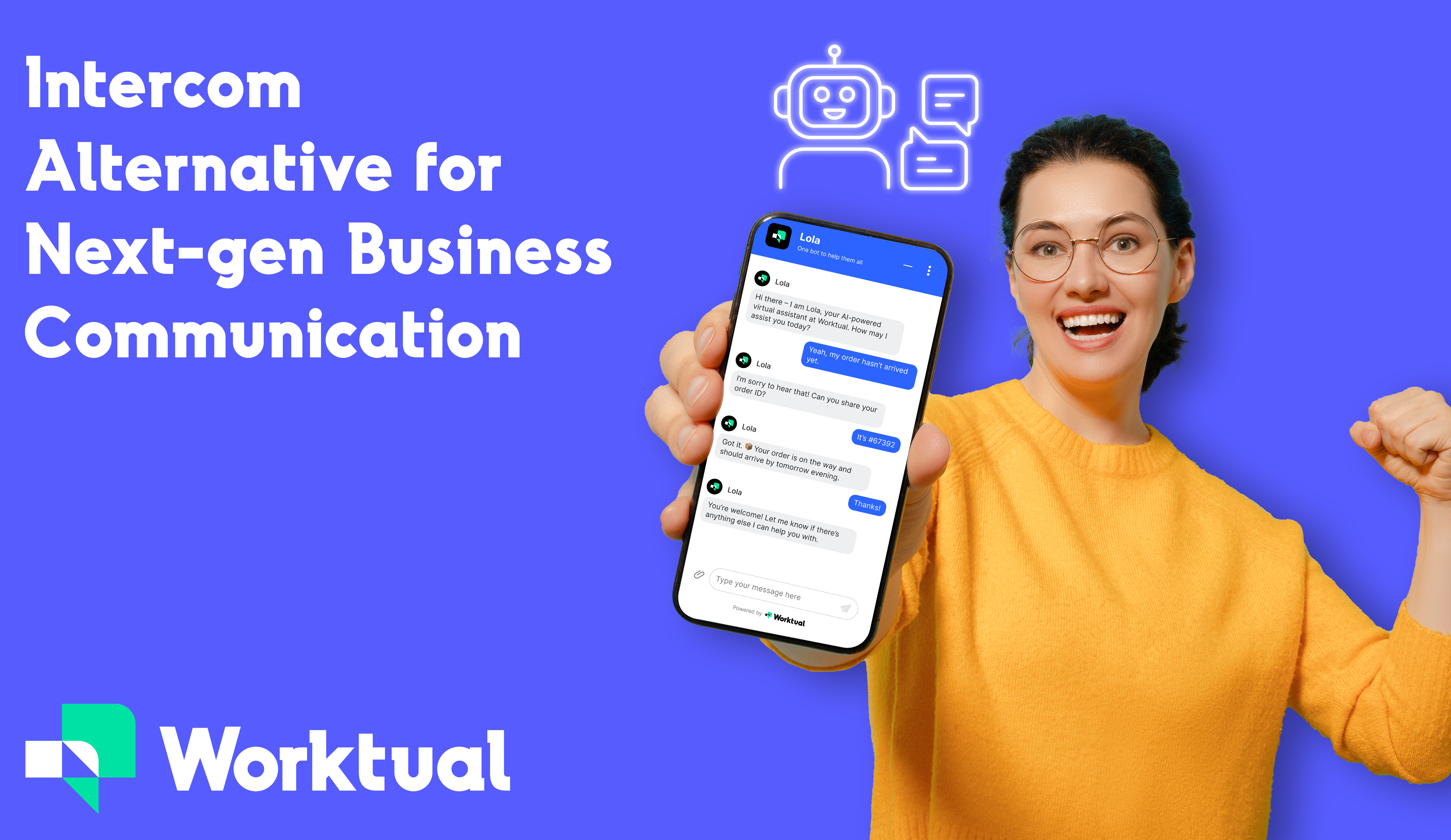
Assume your business is a growing city. You lay small roads and basic infrastructure to manage the flow of traffic. When you prosper, you attract more ]people, but as the city grows, roads become crowded.
Now, traffic jams slow progress, and what worked perfectly doesn’t anymore. Similarly, many businesses face such issues as they scale while using Intercom. While Intercom has come a long way from being a simple messaging tool to an AI-powered customer service platform, it’s still built for the city with smaller roads.
How to choose the best conversational AI tool 2026: a strategic approach to platform selection
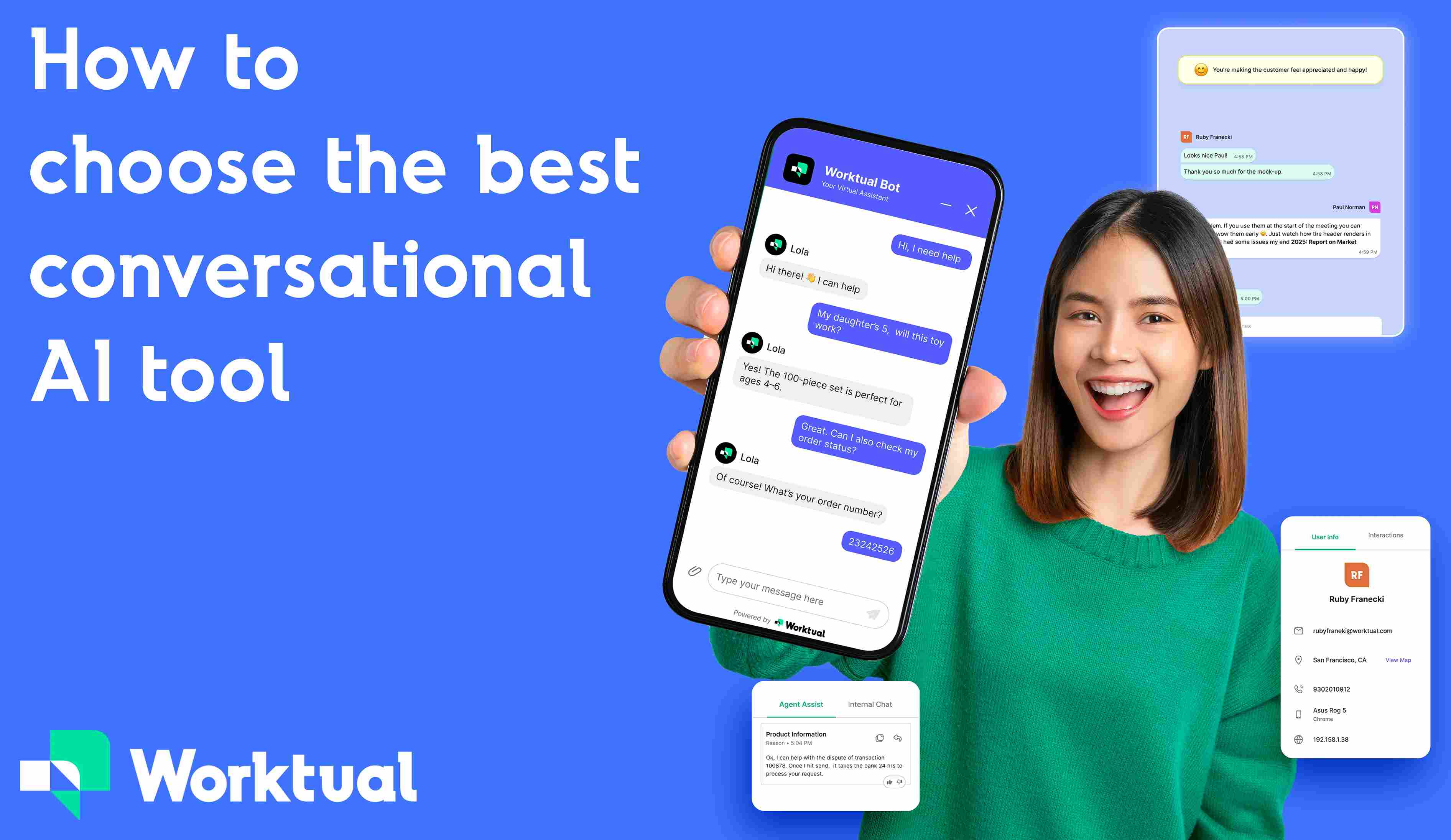
The decision to implement a conversational AI chatbot represents more than a simple technology upgrade; it fundamentally reshapes how businesses interact with customers. Yet the proliferation of options in the market has created a paradox: whilst businesses have never had more choice in conversational AI platform for business solutions, the complexity of selecting the right platform has never been greater.


