

Multichannel Campaign Management Strategies to Engage Customers
Insights / Multichannel Campaign Management Strategies to Engage Customers
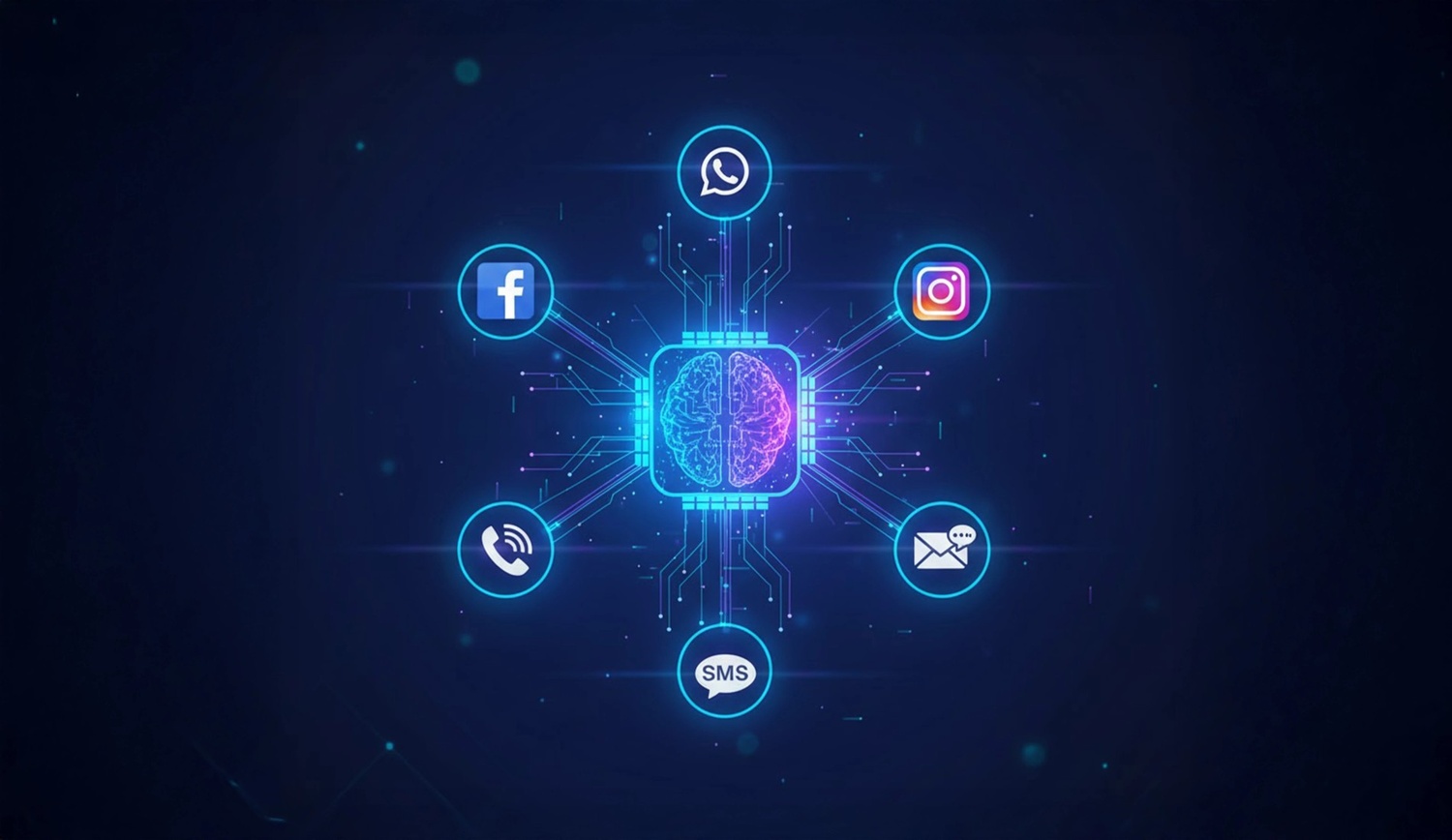
Multichannel campaign management (MCCM) includes the wider process of planning marketing campaigns on multiple platforms of which Email, Whatsapp, SMS, In-App, and Push Notifications are just a few examples. Nowadays, customers prefer simple and consistent experiences over all available channels.
Working in alignment with a campaign management platform, companies can organize their campaigns with messaging that arrives unified, personalized, and delivered on schedule. This enables things such as audience segmentation, journey orchestration, and automated content personalization, through which the companies realize engagement with their audiences on channels that truly matter.
The Importance of Multichannel Campaign Management :
Customer retention and engagement is meaningless without multichannel campaign management. They can engage with a customer through Email, Whatsapp, SMS, and Push Notifications to make the experience timely, relevant, and customer-friendly.
The advantages are:
- Consistent Messaging : Maintains brand voice and values unified across channels.
- Enhanced Personalization : Campaigns can send personalizing messages to individuals based on behaviors and preferences.
- Increased ROI : Organized multichannel campaigns drive more robust conversions and increased lifetime value of customers.
How Agentic Ai Powers Multichannel Campaign Management
Agentic Ai serves as a super-agent that monitors all communication channels concurrently, instead of monitoring the same communications independently. It will always analyze the customer’s data and campaign performance across Email, SMS, WhatsApp, and Push, while still keeping a full view of the customer journey for every customer.
Balance Communication Volume:
Agentic Ai helps reduce the overload of messages you send to your customers by prioritizing your most important communications and strategically delaying the sending of your communications. In the case of multiple promotions, Agentic Ai selects your most timely and relevant message, then delays sending the others; all to avoid delivering multiple messages to a customer in one day that would cause fatigue and possibly opt-out.
Coordinate Timing and Frequency:
The Ai selects the ideal channel, time, and frequency for outreach. It may send a Push Notification when the customer is online, or it may hold off on promotions until after a purchase, all to ensure messages and promotions are timely and not obtrusive.
Adapt Tone and Channel Dynamically:
Ai modifies tone and communication channels customarily based on real-time user behavior and sentiment. For example, if a user has a pattern engaging via SMS and not at all via email, the agentic Ai will prioritize SMS user engagement. If the user is highly engaged the tone will be more action oriented. If the user expresses frustration at any time, the tone will switch to empathizing and service posturing rather than promotions.
Control Personalization and Promotion:
To prevent things from coming off as too personal or spammy, the Ai regulates the frequency of promotions, varies the messages across different platforms, and tailors suggestions to what customers need at the moment instead of what they’ve done before.
In a way, Agentic Ai serves as a smart conductor for campaigns, finding right balancing in personalization, compliance, and engagement in real time.
Key Strategies for Effective Multichannel Campaign Management
Customer Data Integration & Single View of Customer
Customer data from various sources such as CRM, web, social, and email are brought together in a single profile. Agentic Ai uses this unified view to automatically update the insights that facilitate data-driven decisions.
Audience Segmentation & Personalization
The segmentation of users is done through demographics, behaviors, and preferences. Agentic Ai continually updates the segments in real time,so that agent can help in enhancing personalization and make campaigns relevant for each user.
Consistent Brand Messaging Across Channels
Agentic Ai keeps brand consistency throughout Email, social media, SMS, and offline channels by modifying tone and templates in the real-time. Brand presence and trust of the customers are thereby increased.
Automation & Ai-Driven Campaigns
Agentic Ai predicts customer behavior and initiates campaigns automatically. Further, it tracks the current interactions, stops the messages when customers interact, and starts up the communication again when the interest gets lower, resulting in achieving dynamic journey orchestration.
Channel-Specific Optimization
By performance data analysis, Agentic Ai discovers the channels that deliver best results for specific segments. From the insights, it automatically reallocates the resources, so that agents can help in optimizing budget and improving ROI.
Omnichannel Experience & Journey Mapping
Agentic Ai gets the entire customer journey from both online and offline, and adapts campaigns in real-time. If a customer opens an email but doesn’t click on anything, it might send a timely WhatsApp reminder instead of email. Similarly, if a customer gets a promotional notification then quickly visits the website, the Ai might delay a follow-up email or SMS. This may help for a flexible experience.
Compliance, Consent, & Privacy Management
Maintaining personalized campaigns must strictly adhere to privacy laws (like GDPR and CCPA) and respect customer preferences. Agentic Ai manages opt-out lists and consent across all channels in real-time, ensuring legal compliance and preventing communications that violate a customer’s stated preferences, thereby building long-term trust.
Agentic Ai in Action: A Use Case
A customer, John, searched for a new pair of running shoes but didn’t buy one. Agentic Ai evaluates his profile and real-time activity to make critical decisions:
- Channel Decision & Timing: John often ignores emails but responds quickly to push notifications. The agent sends a Push Notification at 7 PM (his usual high-engagement time) with a gentle reminder, instead of Email.
- Avoiding Duplication: John clicks the Push Notification but leaves the site again. The Ai notes the engagement signal. It then suppresses a pre-scheduled, duplicate “Last Chance” SMS from another campaign, instead prioritizing a personalized email 24 hours later with a slightly different, more engaging subject line and a small incentive.
- Adapting Tone: If John contacts customer support about a different product, the Ai immediately pauses all promotional messages across all channels and shifts the subsequent automated communication’s tone to be service-focused and empathetic, preventing frustration and gaining trust.
Measuring Success of Multichannel Campaigns
It’s important to measure marketing for multichannel campaign effectiveness to improve engagement and ROI. The following key metrics should be the focus:
Click-Through Rate (CTR) and Conversion Rate
- CTR measures how many recipients clicked on a campaign link, showing the campaign’s effectiveness. Conversion Rate goes further by tracking how many users completed actions like making a purchase or signing up.
Customer Lifetime Value (CLV)
- CLV measures the total revenue a customer generates throughout their relationship with the brand. It shifts focus from short-term sales to long-term profit. Agentic Ai analyzes CLV data to identify and keep high-value customers automatically.
Engagement Rate
- Engagement Rate tracks interactions across Email, SMS, Push, and social channels. High engagement suggests relevant and timely communication. Agentic Ai adjusts tone, timing, and frequency to keep interest up.
Cross-Channel Attribution
- Cross-channel attribution identifies which channels or combinations of channels drive conversions by analyzing the complete customer journey. This helps improve both messaging strategies and budget allocation.
ROI and Channel Contribution
- ROI measures campaign profitability, while channel contribution shows which platforms perform best. Agentic Ai continuously analyzes spending and results, reallocating resources to maximize return in real time.
Challenges in Multichannel Campaign Management
While MCCM delivers major benefits, several challenges can hinder success if not managed properly.
Data Silos & Integration
When customer data includes purchase and their behaviour is spread across different platforms (CRM, social, email, etc.), it becomes difficult to form a complete customer view. These silos lead to fragmented insights and inconsistent experiences. By integrating all data sources into a single unified platform, businesses can enable real-time decision-making and true personalization.
Balancing Personalization & Privacy
As personalization becomes more advanced, so do concerns about data privacy and compliance. Marketers must respect consent preferences (like GDPR or local privacy laws) while still providing customized experiences. Agentic Ai supports compliance by managing opt-ins, anonymizing sensitive data, and ensuring communications remain within regulatory boundaries.
Customer Fatigue & Frequency Capping
Over-communicating can cause customers to unsubscribe, or even develop negative brand sentiment. Frequency capping prevents this by limiting how often messages are sent to each user. Agentic Ai monitors engagement patterns and automatically pauses or slows campaigns when it detects fatigue or saturation.
Resource & Budget Optimization
Running campaigns across multiple channels can strain marketing teams and budgets. Deciding where to spend, which content to prioritize, and when to engage can be complex. Ai-driven optimization allocates resources efficiently focusing on high-performing channels and audiences to maximize return with minimal effort.
Worktual resolves these challenges by providing a unified platform that consolidates campaign data, automates workflows, manages compliance, and empowers teams to focus on strategy rather than repetitive tasks.
Future Trends in Multichannel Campaign Management
The next phase of campaign management is being shaped by Agentic Ai, automation, and contextual intelligence and understanding. Below are key trends driving the future of MCCM:
Agentic Ai-Powered Predictive Campaigns
Agentic Ai predicts customer behavior based on real-time patterns such as browsing activity, purchase history, or engagement time. It automatically triggers campaigns when customers are most likely to respond, ensuring messages are timely and relevant. This allows marketers to stay ahead of customer intent rather than reacting.
Hyper-Personalization at Scale
Traditional personalization focuses on basic factors like name or location. Whereas Ai powered Hyper-personalization, adapts content based on real-time context, preferences, and emotional tone. For example, Ai can change product recommendations or message style instantly based on user behavior across channels.
360° Customer Engagement
This methodology combines online and offline actions to form a customer journey that is uninterrupted and integrated. All data generated by a user’s website visits, social media engagement, or in-store purchases are unified to create a single customer profile. From there, Ai can deliver the same communication and offers as before at every point of contact.
Real-Time Contextual Marketing
Contextual marketing utilizes up-to-the-minute information such as time, place, or activities to introduce suitable campaigns. One instance is the push notification sending when a customer enters a store or a discount offering after cart abandonment, etc. Agentic Ai sequentially interprets these real-time signals which result in accurate responses.
Ai-Driven Compliance & Consent Management
Ai persistently confirms data privacy and other related rules making it easier to different regulations as they change. It is in charge of the consent preferences, manages opt-outs, and adjusts targeting rules so that they meet the compliance standards. As a result, the risk of human error, which is the greatest cause of unethical and illegal campaigns, is reduced to a minimum.
Smart Resource Allocation
Agentic Ai not just supervises the activities but also, like a wise man, guides a person on the utilization of their time, money, and creative resources. In continuous analysis of ROI, engagement and conversion data are used to reallocate budgets to the most effective channels or audiences, thereby maximizing marketing efficiency and profitability.
Worktual constantly leverages these trends, implementing campaign strategies that are adaptable and Ai-powered, thus, aiding businesses in gaining the competitive advantage.
Conclusion
MultiChannel Campaign Management, which promotes loyalty, engagement, and business growth. Businesses can improve connections and increase ROI by providing individualized and consistent experiences across multi channels. In today’s interconnected world, companies that adopt data-driven, customer-first strategies gain a competitive advantage.
FAQs
1. What is multichannel campaign management?
It’s the practice of running coordinated marketing efforts across multiple platforms (email, social, SMS, ads, etc.) to reach and engage customers in more places.
2. Why do businesses use multichannel campaigns?
They help increase reach and visibility, meet customers where they are, and boost engagement and conversions.
3. How does multichannel engagement improve customer experience?
By delivering consistent messaging and timely interactions across all channels, it creates smoother and more satisfying customer journeys.
4. Do multichannel campaigns require consistency in messaging?
Yes — keeping tone and brand identity consistent strengthens recognition and trust across touchpoints.
5. Is data important for multichannel campaign success?
Absolutely — metrics like engagement, conversions, and customer behavior help optimize performance and refine tactics.
Related Posts

Timing is Everything: Secrets to Perfect Campaigns Powered by Agentic Ai
In marketing, timing can define success. Even the most creative campaigns fail if they reach customers at the wrong moment.

The Decline of Generic Chatbots: How Worktual’s Agentic Ai Chatbot Is Taking Over
Generic chatbots have long been the go-to solution for customer service, mainly handling simple FAQs and routing queries using predefined scripts and keywords.

Multilingual AI Voicebots: Serving Customers Across Regions
Customer experience today is defined by both convenience and feeling connected. As customers expect empathy, immediacy, and accurate intent recognition, personalization has become essential for meaningful engagement.


